

Spring Boot Mobile Money Pawapay Java Sdk in 5 Minutes
Date: 2026-05-27 || Views: 600

Spring Boot Integration in 5 Minutes: Real-Time Sandbox Deposits with Spring WebFlux
Let's cut the boilerplate. When you are building a high-throughput mobile money gateway, you don't have time to wrestle with clunky REST clients or worry about thread-blocking I/O. You need speed, concurrency, and ironclad security from day one.
With the pawaPay Java SDK, we've engineered a zero-friction integration path specifically for modern Java environments. By pairing our SDK with Spring WebFlux, you can execute non-blocking, asynchronous mobile money deposits in under five minutes.
Behind the scenes, our ApiClient handles the heavy lifting. While Spring WebFlux manages the reactive streams, our embedded native Rust core seamlessly processes the cryptographic payload signing and hardware anchoring. You get the developer experience of a lightweight Java library with the execution speed and memory safety of compiled native binaries.
The Setup: Zero-Trust Configuration
We don’t believe in "dummy" fallback secrets, even in the sandbox. Our auto-configuration strictly enforces environment variable validation. If your API token or Katorymnd license key is missing, the SDK aborts execution immediately to protect the application state.
Here is how quickly you can wire up an end-to-end sandbox deposit using the V2 API:
import com.katorymnd.pawapay.sdk.api.ApiClient;
import com.katorymnd.pawapay.sdk.config.Config;
import org.springframework.context.annotation.Bean;
import org.springframework.context.annotation.Configuration;
import org.springframework.web.reactive.function.server.RouterFunction;
import org.springframework.web.reactive.function.server.ServerResponse;
import reactor.core.publisher.Mono;

import java.util.Map;

import static org.springframework.web.reactive.function.server.RequestPredicates.POST;
import static org.springframework.web.reactive.function.server.RouterFunctions.route;

@Configuration
public class PawaPayConfig {

    @Bean
    public ApiClient pawaPayClient() {
        // Strict initialization: No fallback secrets allowed
        String apiKey = System.getenv("PAWAPAY_SANDBOX_API_TOKEN");
        String licenseKey = System.getenv("KATORYMND_PAWAPAY_SDK_LICENSE_KEY");

        Config config = new Config.Builder()
            .apiKey(apiKey)
            .environment("sandbox")
            .timeout(30000)
            .build();

        // Initialize V2 API with strict validation enabled (true)
        return new ApiClient(config, licenseKey, true, "v2");
    }
}

@Configuration
public class DepositRoute {

    @Bean
    public RouterFunction<ServerResponse> deposit(ApiClient pawaPayClient) {
        return route(POST("/api/v2/sandbox/deposit"), request ->
            request.bodyToMono(Map.class)
                .flatMap(payload -> Mono.fromFuture(
                    // Native non-blocking execution mapped directly to Project Reactor
                    pawaPayClient.initiateDepositV2(
                        payload.get("transactionId").toString(),
                        payload.get("amount").toString(),
                        payload.get("currency").toString(),
                        payload.get("phone").toString(),
                        payload.get("provider").toString(),
                        "Spring WebFlux Deposit Test",
                        null, null, null
                    )
                ))
                .flatMap(response -> ServerResponse.ok().bodyValue(response))
                .onErrorResume(e -> ServerResponse.badRequest().bodyValue(Map.of("error", e.getMessage())))
        );
    }
}
What just happened?
First, the Strict Initialization phase took over. The Config.Builder loaded your specific environment variables, and the ApiClient booted the V2 environment, securely locking in your license key and native binary core.
Next, we established Reactive Routing by defining a functional endpoint utilizing Spring WebFlux to handle the incoming payload.
Finally, the system executed Non-Blocking Execution. The initiateDepositV2 method returns a CompletableFuture, which seamlessly maps to a Project Reactor Mono. This ensures your application threads remain completely unblocked during the network call and cryptographic signing.


Katorymnd Freelancer now accepts cryptocurrency payments, offering faster, secure transactions...

Glimpses of Greatness Crafted by Katorymnd
Dive into the journeys of clients I've empowered.
Click any project below to explore the results - each one a story of transformation.
pawaPay Java SDK - Payment Integration


pawaPay Java SDK: Seamless enterprise mobile money integration for Java applications. Features robust typing, thread-safe execution, and reliable transaction handling.
pawaPay Python SDK - Payment Integration
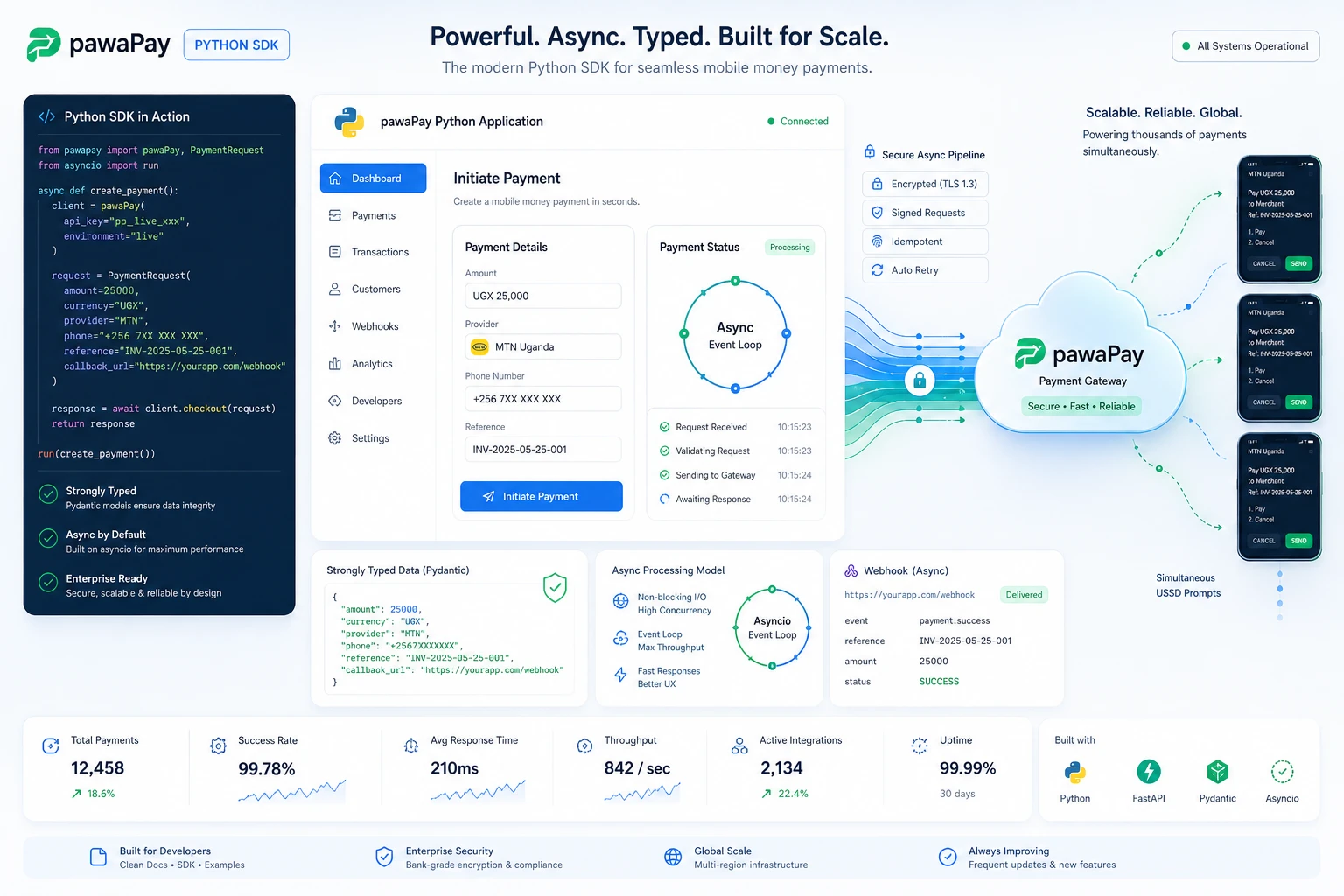
pawaPay Python SDK: Seamless enterprise mobile money integration for Python applications. Features robust typing and asynchronous transaction handling.
pawaPay Node.js SDK, Payments
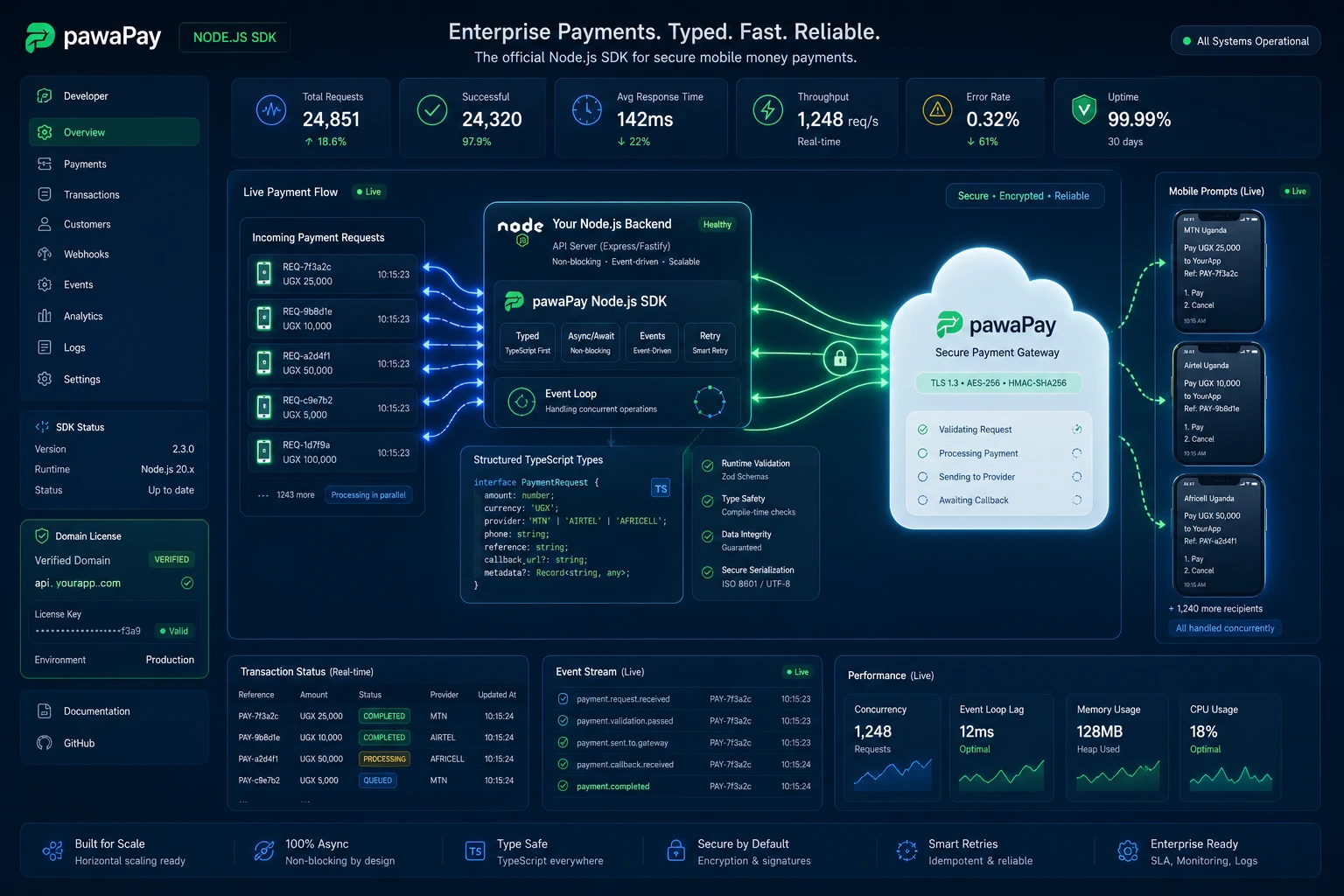
pawaPay Node.js SDK: Enterprise mobile money integration for Node.js & TypeScript. Strictly typed, async wrapper with simple domain-based licensing.
Clean My Mind - A Quiet Release

A privacy-first web ritual, no signup, say one sentence and let it go. Built with vanilla JavaScript, local-only storage, and focused on presence rather than analytics.
Professional Services
© Copyright 2026 - Katorymnd Web Solutions - All Rights Reserved. Registered with Uganda Registration Services Bureau.