

Secure Pawapay Webhooks Python Prevent Double Spend
Date: 2026-04-27 || Views: 748
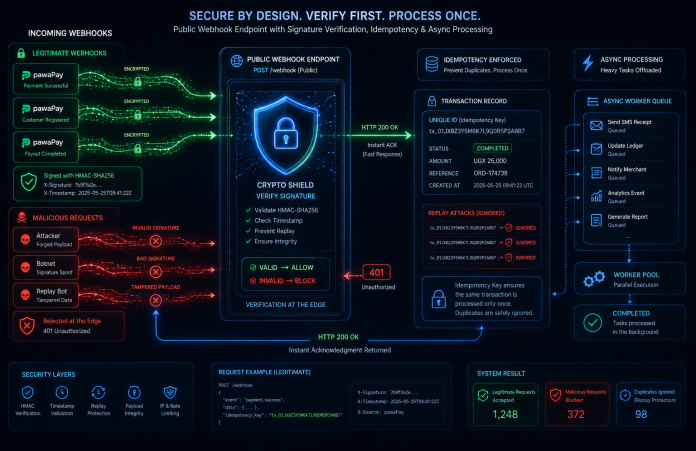
Handling Webhooks & Double-Spends: Securing Your Database Against Replay Attacks
In the architecture of asynchronous mobile money systems, webhooks represent the ultimate vulnerability. When your server exposes a public endpoint to listen for terminal transaction updates from the PawaPay gateway, it inherently invites malicious traffic. If an attacker discovers your webhook URL and successfully transmits a forged payload indicating a completed deposit, a naive backend will obediently provision services or credit wallet balances, resulting in catastrophic financial loss. Furthermore, even legitimate webhooks can cause double-spends if network instability causes the payment gateway to retry a successful delivery. Neutralizing these threats requires a surgical approach to cryptographic validation and absolute database idempotency.
The first perimeter of defense is cryptographic verification, operating under the principle that you must never trust the origin of an HTTP request based solely on its payload. PawaPay secures outbound webhooks by appending a cryptographic signature to the request headers, typically generated via HMAC-SHA256 using a shared secret. When your Python endpoint receives an inbound POST request, the application must immediately halt processing and recalculate the hash using the raw request body and your securely stored webhook secret. By comparing your locally generated hash against the header signature, you mathematically guarantee that the payload originated exclusively from PawaPay and has not been altered in transit. The pawaPay Python SDK abstracts this complex validation into a single, memory-safe method within its Rust core, instantly rejecting forged traffic with an HTTP 401 Unauthorized response before it ever touches your database logic.
Even with perfect cryptographic validation, your system remains vulnerable to replay attacks and network-induced double-spends. Mobile network operators frequently experience latency, prompting the PawaPay gateway to retry webhook deliveries if your server fails to acknowledge receipt quickly enough. If your database simply updates user balances upon receiving a verified payload, a duplicated webhook will credit the user twice. To surgically neutralize this, your backend must enforce strict idempotency based on the unique transaction identifier provided during initiation.
When a webhook arrives, your application must initiate an atomic database transaction that places a lock on the specific payment record. It then evaluates the current state of that record. If the database indicates that the transaction has already transitioned to a completed or failed terminal state, the application must immediately discard the duplicate webhook. It should perform no further database writes but must still return a successful HTTP acknowledgment to satisfy the payment gateway's retry logic and prevent further duplicates.
The final architectural mandate for secure webhook handling is the total separation of acknowledgment from business fulfillment. Payment gateways impose strict timeout windows on webhook deliveries. If your application attempts to provision digital goods, generate PDF receipts, or execute complex relational database updates before returning an HTTP response, the connection will inevitably time out. The gateway will assume delivery failure and initiate a barrage of retries, severely degrading your server performance and risking database deadlocks. A production-grade endpoint must acknowledge the cryptographic validity and idempotency of the payload, instantly return a 200 OK HTTP status, and delegate the actual business fulfillment to an asynchronous background worker or a robust message queue like Redis or RabbitMQ. This surgical decoupling ensures your webhook listener remains highly available, resilient to network traffic spikes, and completely immune to processing bottlenecks.


Explore Katorymnd Freelancer's strategy for engaging web content under 'Content...

Discover Katorymnd's skilled Ugandan web design team, their diverse expertise,...
Glimpses of Greatness Crafted by Katorymnd
Dive into the journeys of clients I've empowered.
Click any project below to explore the results - each one a story of transformation.
pawaPay Java SDK - Payment Integration


pawaPay Java SDK: Seamless enterprise mobile money integration for Java applications. Features robust typing, thread-safe execution, and reliable transaction handling.
pawaPay Python SDK - Payment Integration
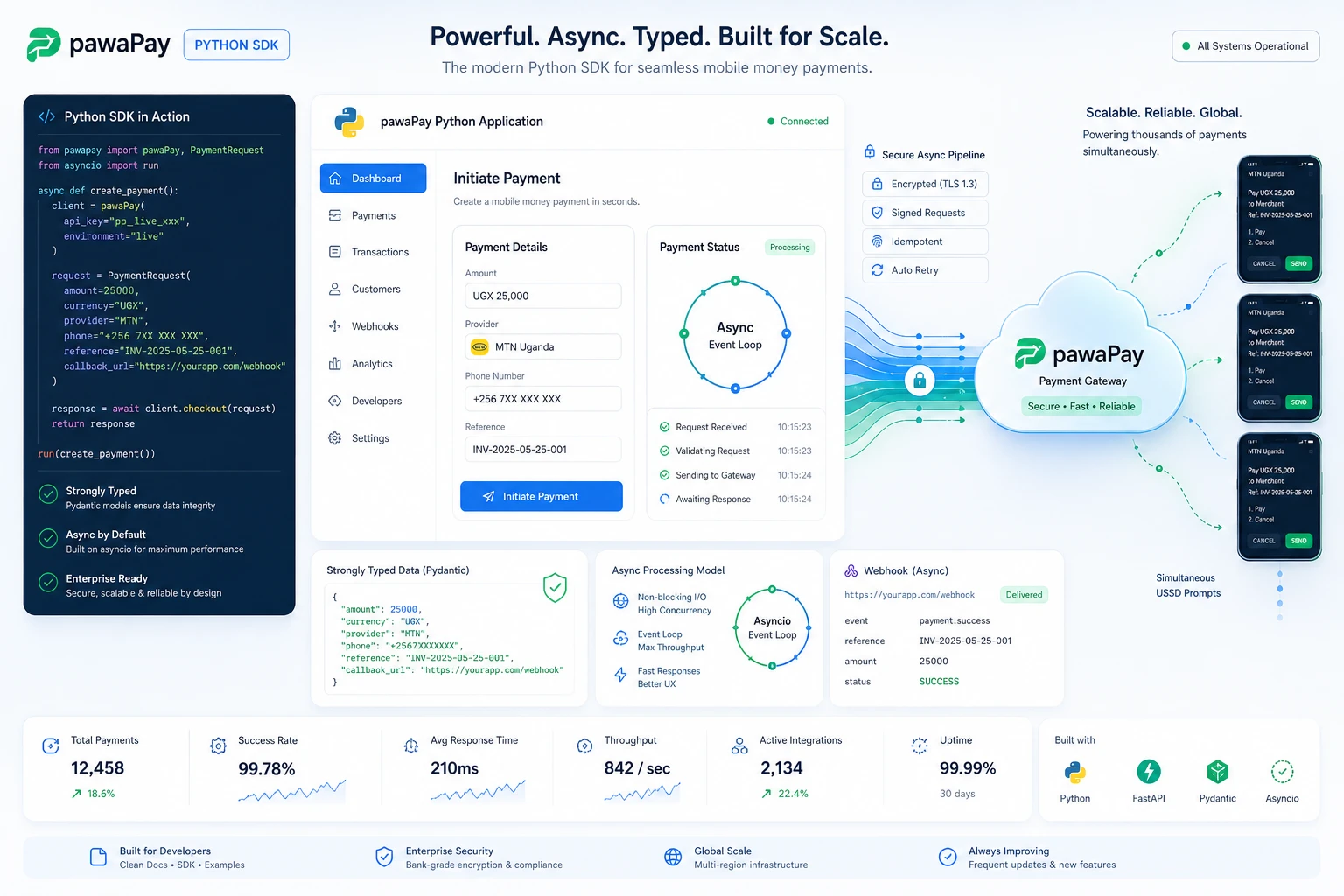
pawaPay Python SDK: Seamless enterprise mobile money integration for Python applications. Features robust typing and asynchronous transaction handling.
pawaPay Node.js SDK, Payments
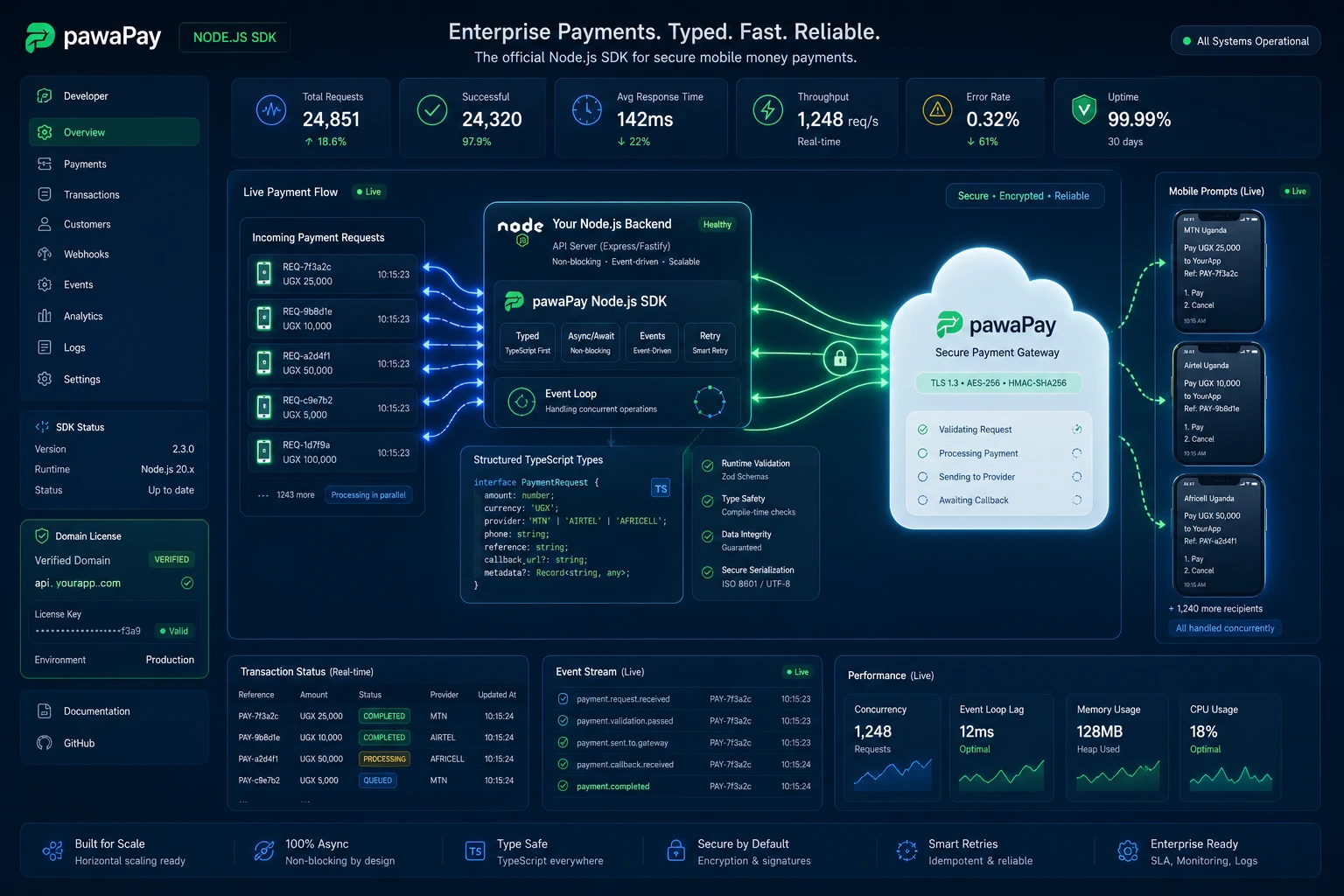
pawaPay Node.js SDK: Enterprise mobile money integration for Node.js & TypeScript. Strictly typed, async wrapper with simple domain-based licensing.
Clean My Mind - A Quiet Release

A privacy-first web ritual, no signup, say one sentence and let it go. Built with vanilla JavaScript, local-only storage, and focused on presence rather than analytics.
Professional Services
© Copyright 2026 - Katorymnd Web Solutions - All Rights Reserved. Registered with Uganda Registration Services Bureau.