

Pawapay V2 Mobile Money Refunds: Python Sdk Guide
Date: 2026-04-30 || Views: 1,481
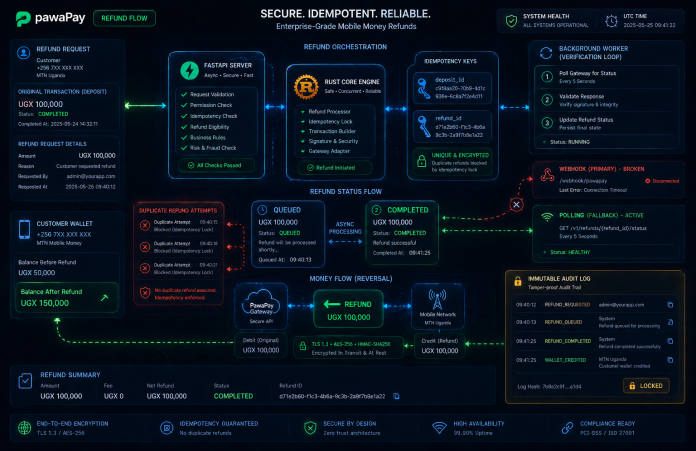
Surgical Refund Processing: Programmatic V2 Mobile Money Refunds
Processing refunds in the African mobile money ecosystem requires absolute precision. A misconfigured refund request can easily result in double-crediting a customer or creating irreconcilable accounting anomalies. Unlike standard credit card voids, mobile money refunds initiate a completely new, asynchronous network transaction that reverses the original capital flow. To manage this safely, the pawaPay Python SDK provides a strictly typed, idempotent V2 refund implementation backed by its secure Rust core. This article details the programmatic execution, state verification, and audit logging required for production-grade refund handling.
Executing the Refund Request
The execution of a V2 refund demands strict cryptographic and structural validation before the payload ever reaches the mobile network operator. The Python backend must supply the original deposit identifier alongside a newly generated, mathematically unique refund identifier. This dual-key architecture guarantees idempotency. If a network timeout occurs and your server retries the exact same refund identifier, the PawaPay gateway recognizes the duplication and prevents the customer from being credited twice.
Furthermore, the V2 architecture requires explicit declaration of the refund amount and currency, allowing for surgical partial refunds. The following implementation demonstrates how to securely initiate this reversal using the SDK.
import os
import asyncio
from fastapi import FastAPI, HTTPException
from fastapi.responses import JSONResponse
from dotenv import load_dotenv

from src.api.ApiClient import ApiClient
from src.utils.helpers import Helpers

load_dotenv()
app = FastAPI(title="Refund Gateway")

config = {
    'api_token': os.environ.get("PAWAPAY_PRODUCTION_API_TOKEN"),
    'environment': 'production',
    'api_version': 'v2',
    'license_key': os.environ.get("KATORYMND_PAWAPAY_SDK_LICENSE_KEY")
}

client = ApiClient(config)

@app.post("/api/refund")
async def process_refund(deposit_id: str, amount: str):
    refund_id = Helpers.generate_unique_id()

    meta_data = [
        {"fieldName": "reason", "fieldValue": "Customer Requested Return"},
        {"fieldName": "adminUser", "fieldValue": "Admin-01"}
    ]

    try:
        response = await client.initiate_refund_v2(
            refund_id=refund_id,
            deposit_id=deposit_id,
            amount=amount,
            currency="UGX",
            metadata=meta_data
        )

        if response.get("status") in [200, 201, 202]:
            return JSONResponse(content={"refund_id": refund_id, "status": "QUEUED"})

        raise HTTPException(status_code=400, detail="Gateway rejected the refund.")

    except Exception as e:
        raise HTTPException(status_code=500, detail="Refund Execution Error")
Verifying the Terminal State
Because mobile network operators process transactions asynchronously, a successful HTTP response from the initiation call merely confirms that the refund has been queued, not finalized. Relying solely on webhooks to confirm the final state introduces the risk of dropped packets leaving your database in perpetual suspense. A surgical integration must proactively sweep for the terminal state.
The SDK provides an automated status-checking method that directly queries the gateway using your unique refund identifier. By scheduling an asynchronous background worker to verify the transaction a few seconds after initiation, your application pulls the definitive success or failure state directly into your database. This approach completely bypasses the webhook vacuum, ensuring absolute parity between your internal ledger and the mobile network's reality.
async def verify_refund_state(refund_id: str):
    await asyncio.sleep(5)

    try:
        status_response = await client.check_transaction_status_auto(
            transaction_id=refund_id,
            type="refund"
        )

        state_data = status_response.get("data", {})
        terminal_status = state_data.get("status")

        if terminal_status == "COMPLETED":
            # Safely update your database ledger here
            pass

    except Exception as e:
        # Log the polling failure for manual reconciliation
        pass
Immutable Audit Logging
Financial compliance mandates that every refund leaves an immutable audit trail. When the terminal state is confirmed, your backend must log not only the transaction identifiers and the currency amounts but also the specific operational metadata. The V2 API intentionally supports attaching custom metadata payloads, allowing you to permanently bind the administrative user and the exact reason for the reversal to the gateway's transaction record.
By piping the SDK's execution tracebacks and the final JSON response objects into a secure, append-only server log, you create a surgical diagnostic record. This record becomes the ultimate source of truth for your accounting department. It provides cryptographic proof of the network interaction, the exact timestamps of execution, and the final state returned by the provider, safeguarding your business in the event of a customer dispute or an internal financial audit.
Conclusion
Handling financial reversals programmatically does not have to be a fragile operation. By leveraging the compiled Rust core of the SDK to enforce strict payload shaping, aggressive idempotency, and active state verification, your Python backend transforms a high-risk network operation into a predictable, surgical procedure. Your application remains highly responsive, your accounting remains perfectly balanced, and your infrastructure remains entirely immune to the chaotic latency of external mobile networks.

Learn to customize login processes with Katorymnd Plugin for enhanced...

Glimpses of Greatness Crafted by Katorymnd
Dive into the journeys of clients I've empowered.
Click any project below to explore the results - each one a story of transformation.
pawaPay Java SDK - Payment Integration


pawaPay Java SDK: Seamless enterprise mobile money integration for Java applications. Features robust typing, thread-safe execution, and reliable transaction handling.
pawaPay Python SDK - Payment Integration
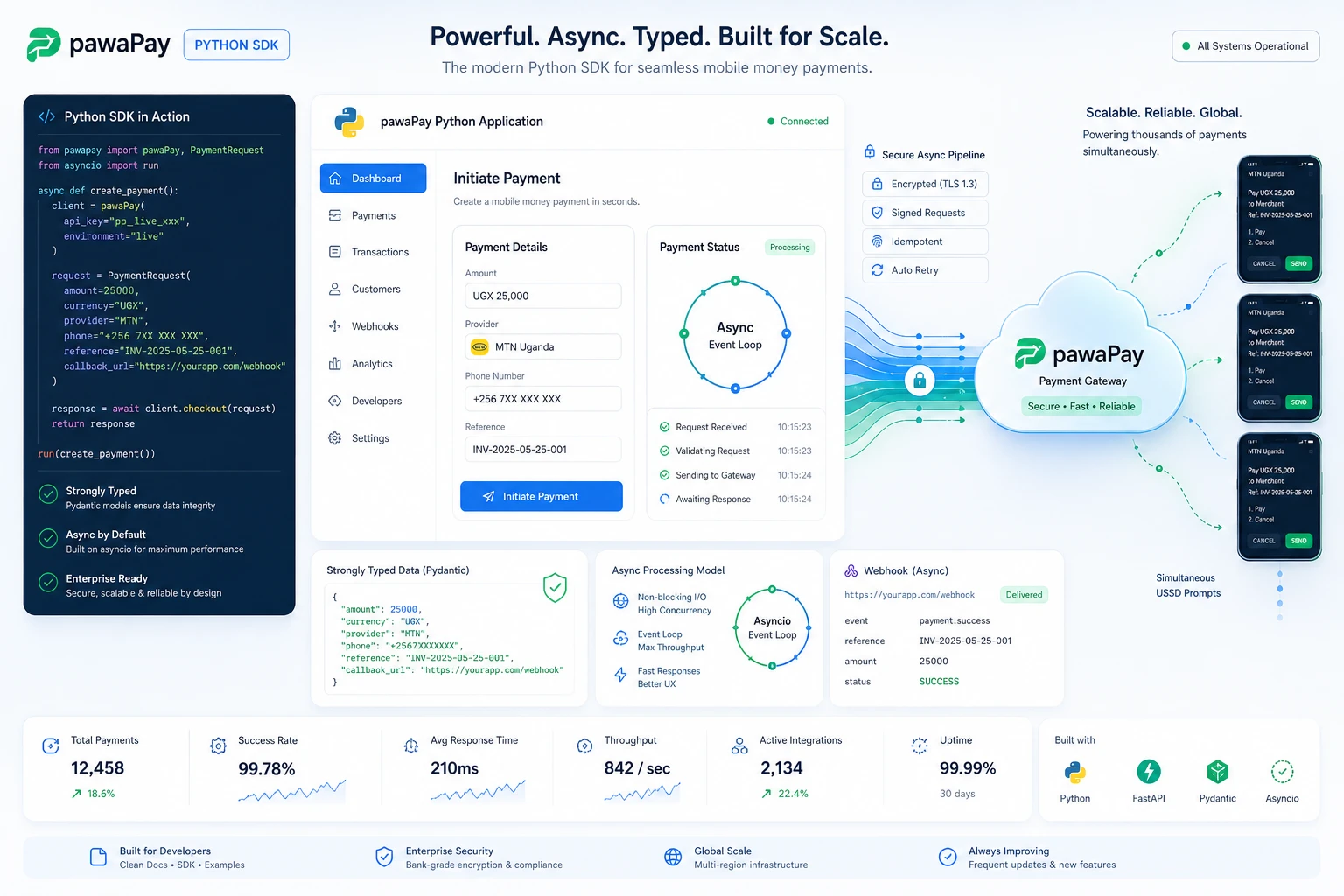
pawaPay Python SDK: Seamless enterprise mobile money integration for Python applications. Features robust typing and asynchronous transaction handling.
pawaPay Node.js SDK, Payments
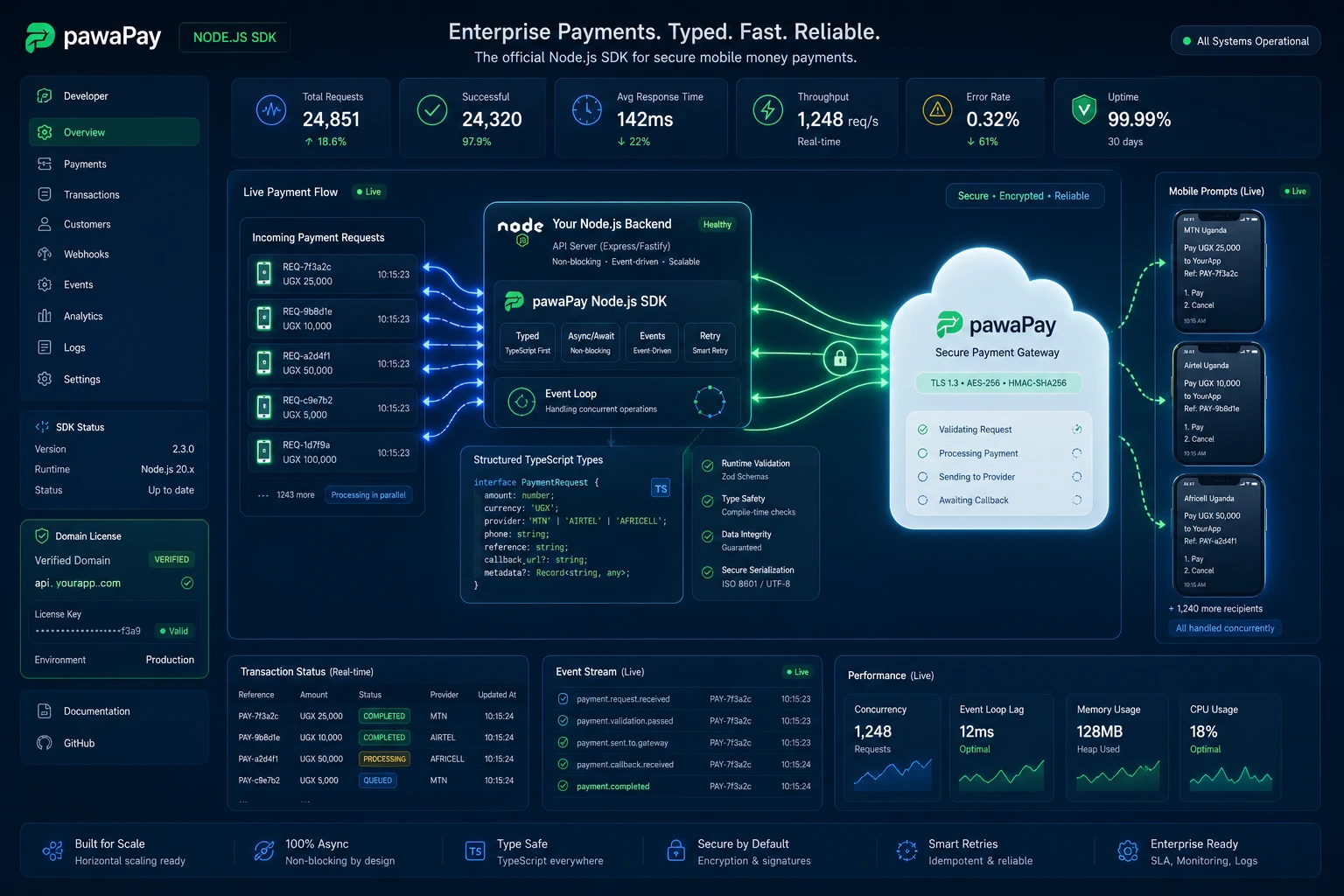
pawaPay Node.js SDK: Enterprise mobile money integration for Node.js & TypeScript. Strictly typed, async wrapper with simple domain-based licensing.
Clean My Mind - A Quiet Release

A privacy-first web ritual, no signup, say one sentence and let it go. Built with vanilla JavaScript, local-only storage, and focused on presence rather than analytics.
Professional Services
© Copyright 2026 - Katorymnd Web Solutions - All Rights Reserved. Registered with Uganda Registration Services Bureau.