

Pawapay Rest Api Vs Java Sdk: Spring Boot Integration
Date: 2026-05-31 || Views: 694

pawaPay REST API vs. Java SDK: The Technical Benchmark
Integrating mobile money infrastructure fundamentally forces an architectural choice between hand-rolling a raw REST client or adopting a vendor SDK. While building a manual OkHttp client might seem like a straightforward path for standard JSON APIs, executing financial transactions across African mobile network operators introduces severe cryptographic and concurrency requirements that quickly overwhelm standard boilerplate.
The Hidden Cost of Manual OkHttp Integrations
When you build a raw REST integration using OkHttp or standard Java HTTP clients, the burden of security and thread management falls entirely on your application code. To authenticate a secure pawaPay deposit or payout request, your developers must manually construct the Content-Digest, compute the HMAC signature, and inject the complex Signature-Input metadata headers required by the API.
This manual process requires pulling your master environment secrets directly into the standard JVM heap to compute the hashes. Once loaded into standard Java memory, these raw cryptographic keys become susceptible to heap dumps, memory scraping, and basic decompilation techniques. Furthermore, managing raw HTTP connections to asynchronous MNO gateways requires intricate connection pool tuning. A manual OkHttp implementation fundamentally blocks the executing thread until a socket timeout occurs or an HTTP response is returned. In a high-throughput environment dealing with degraded network states, these blocking calls will inevitably starve your application thread pools and lead to cascading system failures.
The Native SDK Advantage
The pawaPay Java SDK eliminates this fragile boilerplate by fundamentally changing where the execution happens. Instead of relying on vulnerable JVM cryptographic libraries and blocking HTTP calls, the SDK routes your payload directly into our compiled, native JNI vault. You do not write signature-generation logic or manage manual HTTP connection pools. You simply pass the transaction parameters into the ApiClient, and the embedded Rust core securely reads the bytecode. It validates your strict environment variables-instantly aborting if fallback secrets are detected-and computes the tamper-proof signature within a memory-safe black box without ever exposing your keys to the JVM heap.
By mapping directly to Project Reactor via CompletableFuture, the SDK inherently protects your application threads. The moment the native core dispatches the cryptographically sealed payload, the execution immediately yields the thread back to your Spring WebFlux application. This allows a single application instance to handle massive concurrent transaction initiations without a single thread blocking on an MNO network delay.
The Path to Production
The technical benchmark is ultimately measured in engineering hours and security posture. A manual REST integration requires weeks of writing custom signature interceptors, tuning thread pools, and running rigorous penetration tests to ensure your JVM heap isn't leaking financial secrets. By contrast, the native JNI SDK provides an impenetrable cryptographic vault and a perfectly tuned, non-blocking network layer out of the box. It transforms what is typically a multi-week infrastructure project into a hyper-secure, production-ready integration that takes exactly five minutes to implement.
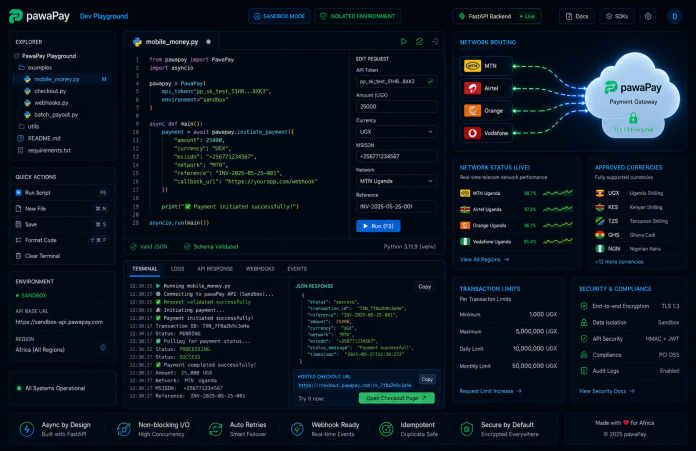


Glimpses of Greatness Crafted by Katorymnd
Dive into the journeys of clients I've empowered.
Click any project below to explore the results - each one a story of transformation.
pawaPay Java SDK - Payment Integration


pawaPay Java SDK: Seamless enterprise mobile money integration for Java applications. Features robust typing, thread-safe execution, and reliable transaction handling.
pawaPay Python SDK - Payment Integration
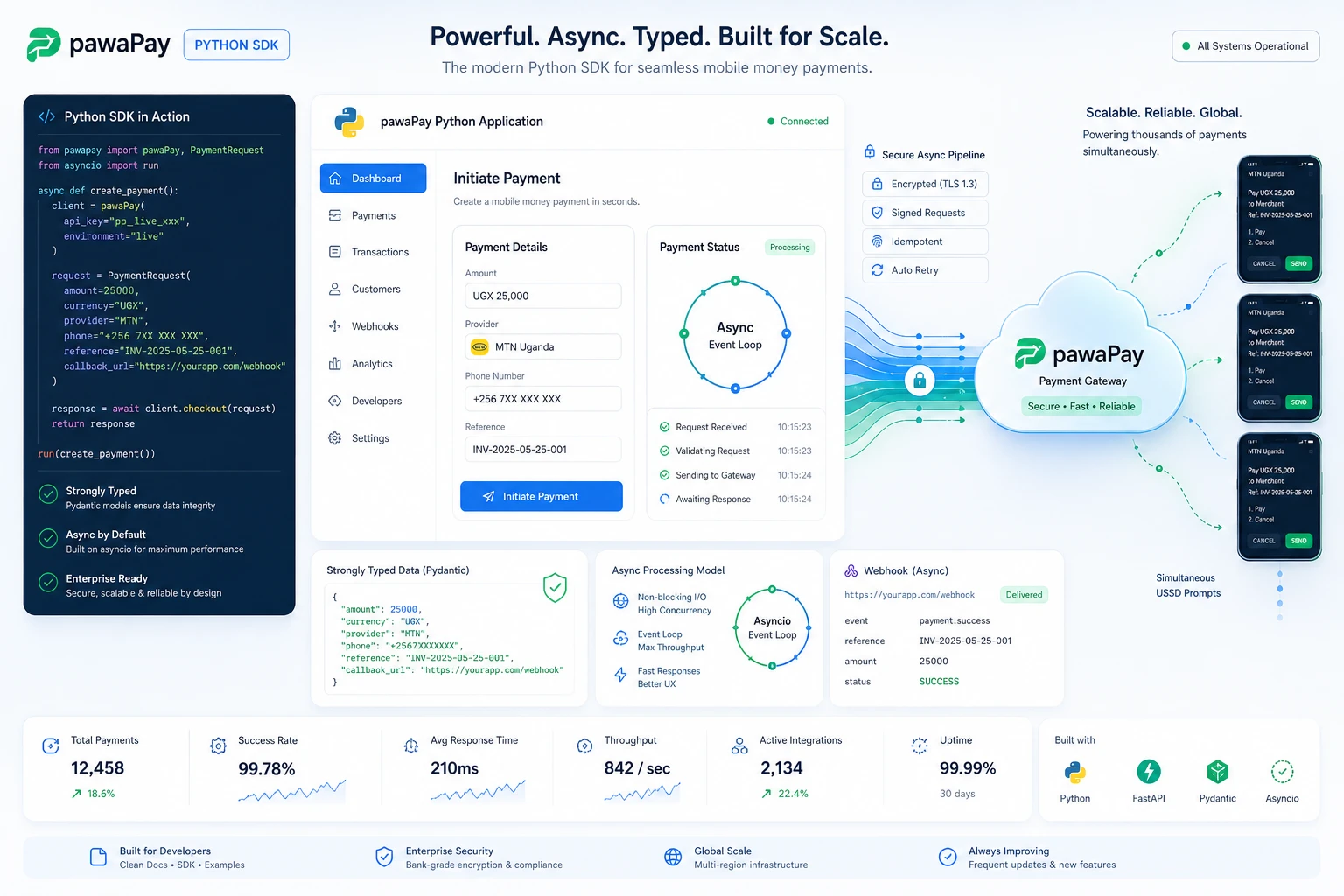
pawaPay Python SDK: Seamless enterprise mobile money integration for Python applications. Features robust typing and asynchronous transaction handling.
pawaPay Node.js SDK, Payments
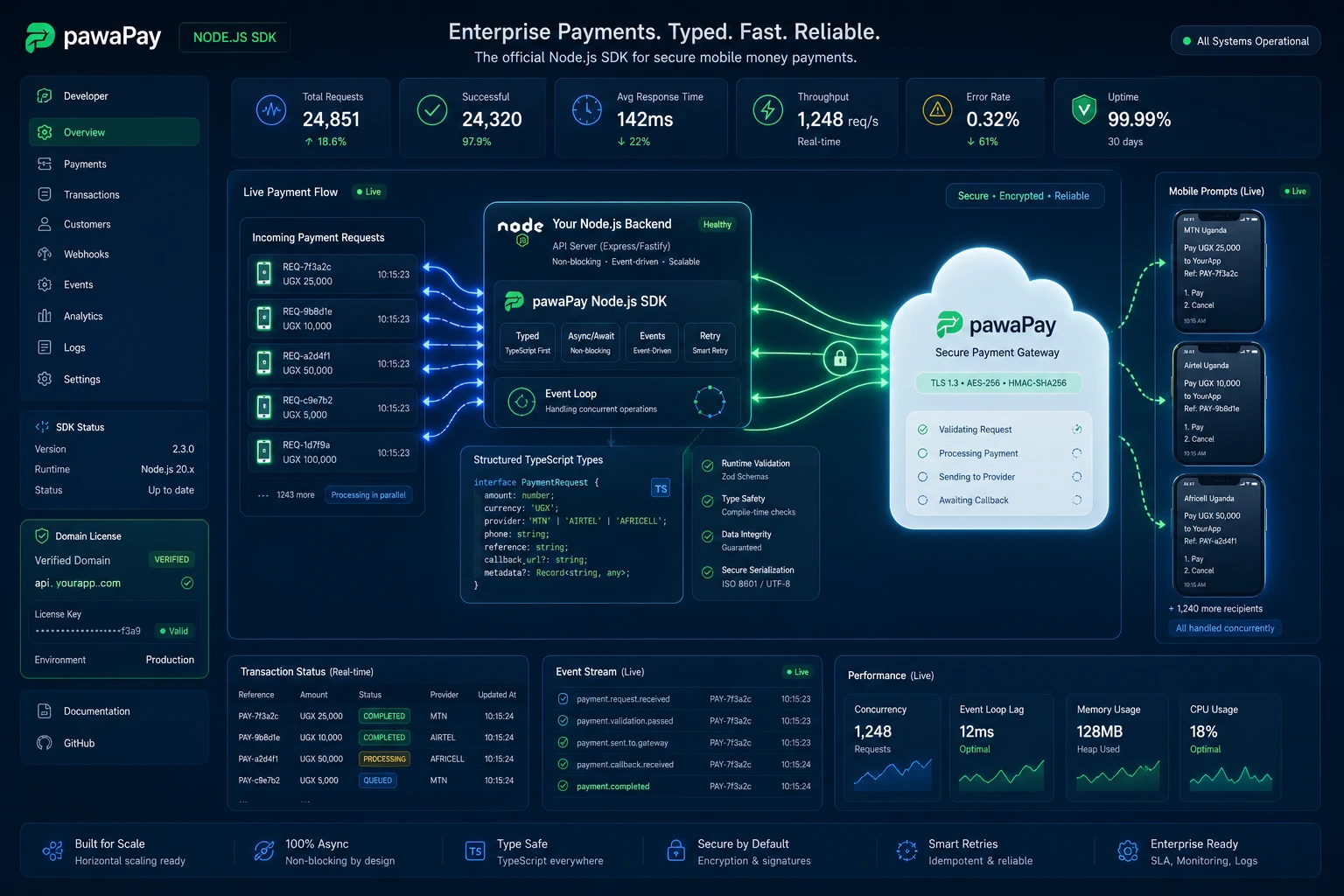
pawaPay Node.js SDK: Enterprise mobile money integration for Node.js & TypeScript. Strictly typed, async wrapper with simple domain-based licensing.
Clean My Mind - A Quiet Release

A privacy-first web ritual, no signup, say one sentence and let it go. Built with vanilla JavaScript, local-only storage, and focused on presence rather than analytics.
Professional Services
© Copyright 2026 - Katorymnd Web Solutions - All Rights Reserved. Registered with Uganda Registration Services Bureau.