

Securing Python Mobile Money Sdk Integrations Rust Core
Date: 2026-04-27 || Views: 858

Security Architecture Deep-Dive: Securing Python Mobile Money Integrations with a Native Rust Core
The inherent vulnerability of most Python payment SDKs is their interpreted nature. Python is incredibly fast for development, but because the source code is executed as plain text, it is trivial for a malicious actor with server access to reverse-engineer the logic, spoof license keys, or tamper with transaction payloads before they reach the payment gateway.
When processing African mobile money transactions via PawaPay, the stakes are absolute. A tampered amount or recipient_msisdn in a payout request directly translates to financial hemorrhage.
To neutralize these threat vectors, the pawaPay Python SDK abandons pure Python logic. Instead, it utilizes a "Thin Wrapper / Fat Core" architecture, offloading all cryptographic signing, license validation, and transaction serialization to a memory-safe, compiled Rust Virtual Machine (VM).
In this deep-dive, we will surgically unpack how this architecture prevents transaction tampering and ensures absolute environmental integrity.
The Threat Model: What Are We Preventing?
Before engineering the solution, we must define the exact attack vectors the SDK is designed to defeat. The primary threat is payload tampering, which involves modifying the transaction amount or destination phone number in memory just before the HTTP request is dispatched. The second major threat is license spoofing, where an attacker might attempt to hardcode dummy variables to bypass the SDK's premium domain validation. Finally, environment cloning presents the risk of an attacker copying a licensed SDK installation from an authorized production server to an unauthorized shadow server.
The "Thin Wrapper / Fat Core" Architecture
The SDK is split into two distinct layers, bridging Python's developer ergonomics with Rust's unyielding security guarantees via PyO3 and Maturin.
The Python Wrapper (The Interface)
The Python side of the SDK contains zero business logic. It simply exposes typed asynchronous methods (e.g., initiate_deposit_v2()) and Pydantic models for data validation. When you call a method in Python, it immediately marshals the data and hands it over to the Rust binary.
The Native Rust Core (The Engine)
Compiled into a .so (Linux), .pyd (Windows), or .dylib (macOS) binary, the Rust core acts as an immutable black box. Because it is compiled down to machine code, it cannot be read or modified with standard text editors. It securely handles HMAC-SHA256 license decryption, domain and server fingerprint validation, HTTP client construction, SSL verification, and the cryptographic signing of outgoing payloads.
The Execution Flow: Bytecode & VM Opcodes
To prevent attackers from attempting to decompile the Rust binary itself, the SDK introduces a secondary layer of obfuscation: a proprietary Bytecode Virtual Machine.
When you run the initial katorymnd-pawapay-setup command, the SDK does not just write configuration files. It performs a cryptographic installation that unfolds in three distinct phases.
Phase 1: Generating the "Soul" (.pawapay-imprint)
The setup script interrogates your server hardware, reading the MAC address, CPU architecture, and OS kernel, and combines it with your PAWAPAY_SDK_LICENSE_DOMAIN. It hashes this data to create the .pawapay-imprint. This permanently locks the SDK to your specific physical or virtual machine.
Phase 2: Instruction Randomization
Next, the SDK generates a localized src/utils/vm/opcodes.json alongside an encrypted bytecode.bin file. Unlike standard binaries where an addition operation is always represented by a static hex value like 0x01, the PawaPay SDK randomizes its instruction set upon every unique installation. On your server, an addition operation might be 0x7F, while on another, it is 0x12. The core business logic required to format and send a PawaPay transaction remains heavily encrypted inside this bytecode binary.
Phase 3: Runtime Execution
When you execute a payment in your Python application, a strict sequence is triggered. First, during the handshake, the Rust core wakes up and reads the KATORYMND_PAWAPAY_SDK_LICENSE_KEY from your .env file. It then proceeds to validation, where it verifies the HMAC-SHA256 signature against the PAWAPAY_SDK_LICENSE_DOMAIN and cross-references the hardware fingerprint against the .pawapay-imprint. If the environment is mathematically pure, the core initiates decryption, using the license signature to unlock bytecode.bin and map the randomized opcodes. Finally, during execution, the transaction payload is serialized natively in Rust, sent securely over HTTPS to PawaPay, and the result is handed back to Python.
If any variable is modified-if the domain changes, if the .env is tampered with, or if the Python wrapper attempts to intercept the HTTP request-the Rust VM simply fails to decrypt the bytecode, raising a fatal SignatureInvalidError and halting the server instantly.
Defeating Transaction Tampering
By sequestering the HTTP client inside the Rust core, the SDK neutralizes man-in-the-middle attacks within the server memory itself.
In a standard Python SDK, a compromised dependency could use monkey-patching (e.g., overriding the requests or httpx library) to sniff or alter outbound JSON payloads. In the PawaPay Python SDK, the Python httpx library is never used for the final transaction. The Rust core utilizes its own statically linked, memory-safe HTTP client. Because the Rust runtime is completely isolated from the Python interpreter's dynamic memory, monkey-patching the Python environment has zero effect on the outbound transaction.
The payload enters the Rust black box as parameters and leaves as an encrypted TLS 1.3 stream directly to the PawaPay gateway.
Summary: Industrial-Grade Assurance
Security in financial technology cannot rely on "gentlemen's agreements" or plain-text scripts. By utilizing a compiled Rust VM, randomized bytecode, and strict hardware imprinting, the PawaPay Python SDK enforces security through immutable mathematics. Developers get the speed and async capabilities of FastAPI and Python, while the business gets the ironclad transaction integrity required to scale across African mobile money networks without fear of internal tampering or license exploitation.
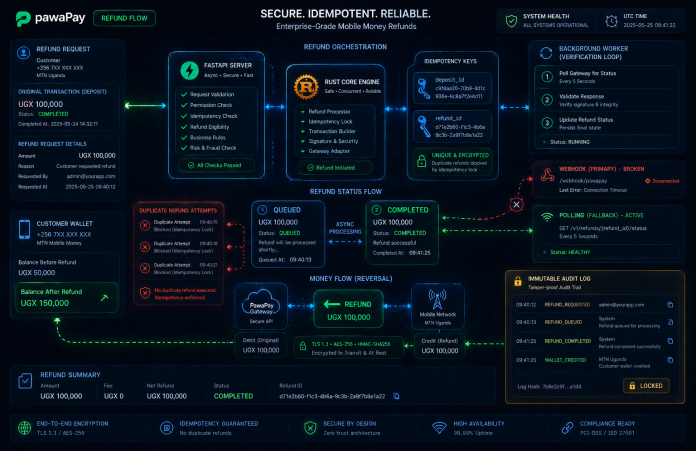
Idempotent V2 refunds, async state verification & immutable audit logging...
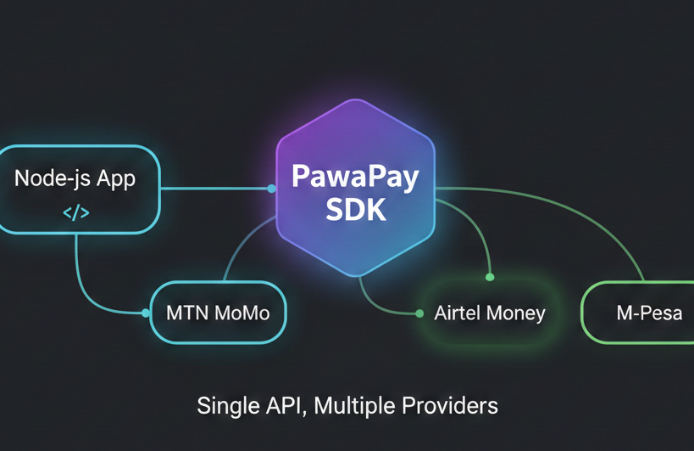

Explore how Predictive UX and personalization are transforming web design...
Glimpses of Greatness Crafted by Katorymnd
Dive into the journeys of clients I've empowered.
Click any project below to explore the results - each one a story of transformation.
pawaPay Java SDK - Payment Integration


pawaPay Java SDK: Seamless enterprise mobile money integration for Java applications. Features robust typing, thread-safe execution, and reliable transaction handling.
pawaPay Python SDK - Payment Integration
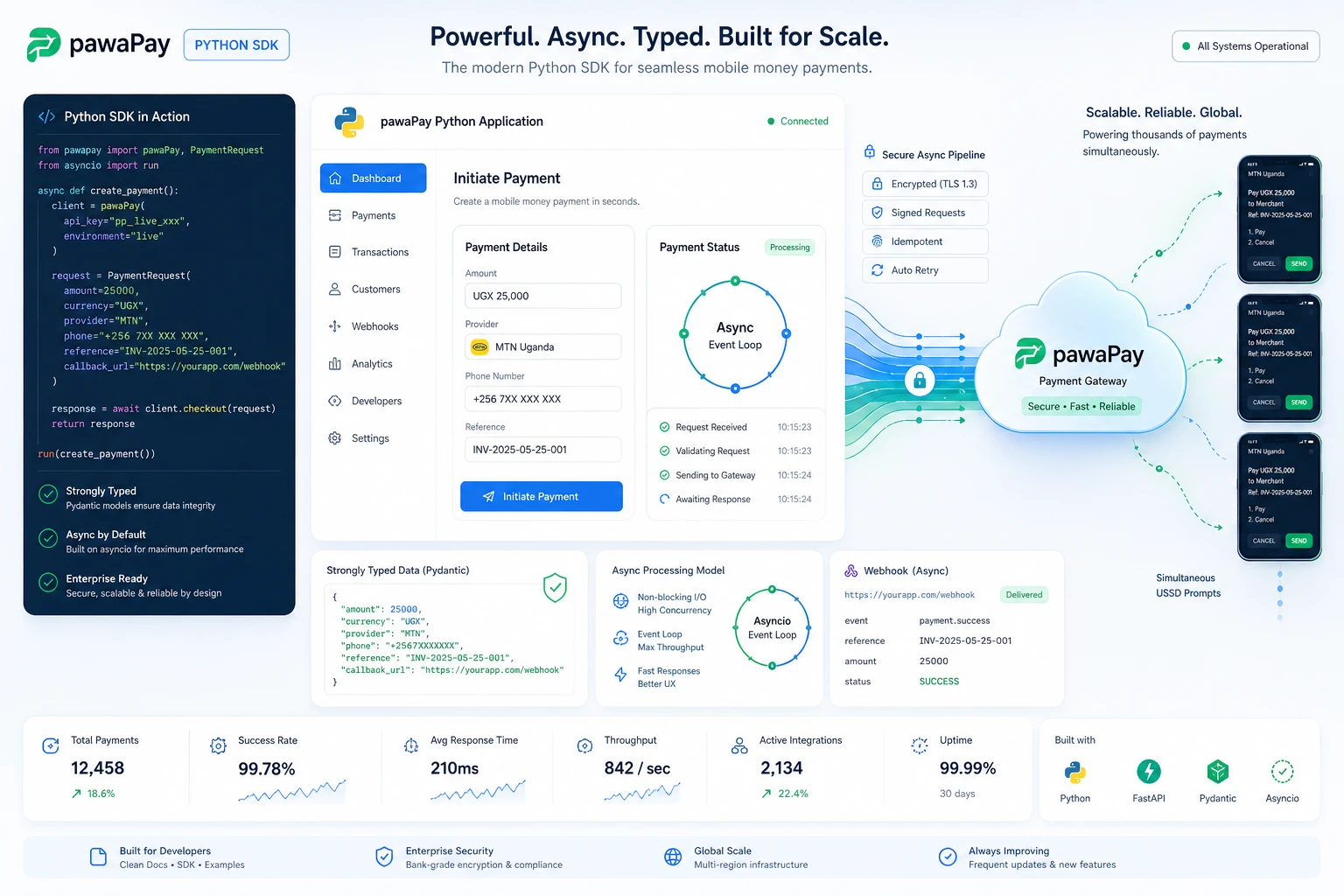
pawaPay Python SDK: Seamless enterprise mobile money integration for Python applications. Features robust typing and asynchronous transaction handling.
pawaPay Node.js SDK, Payments
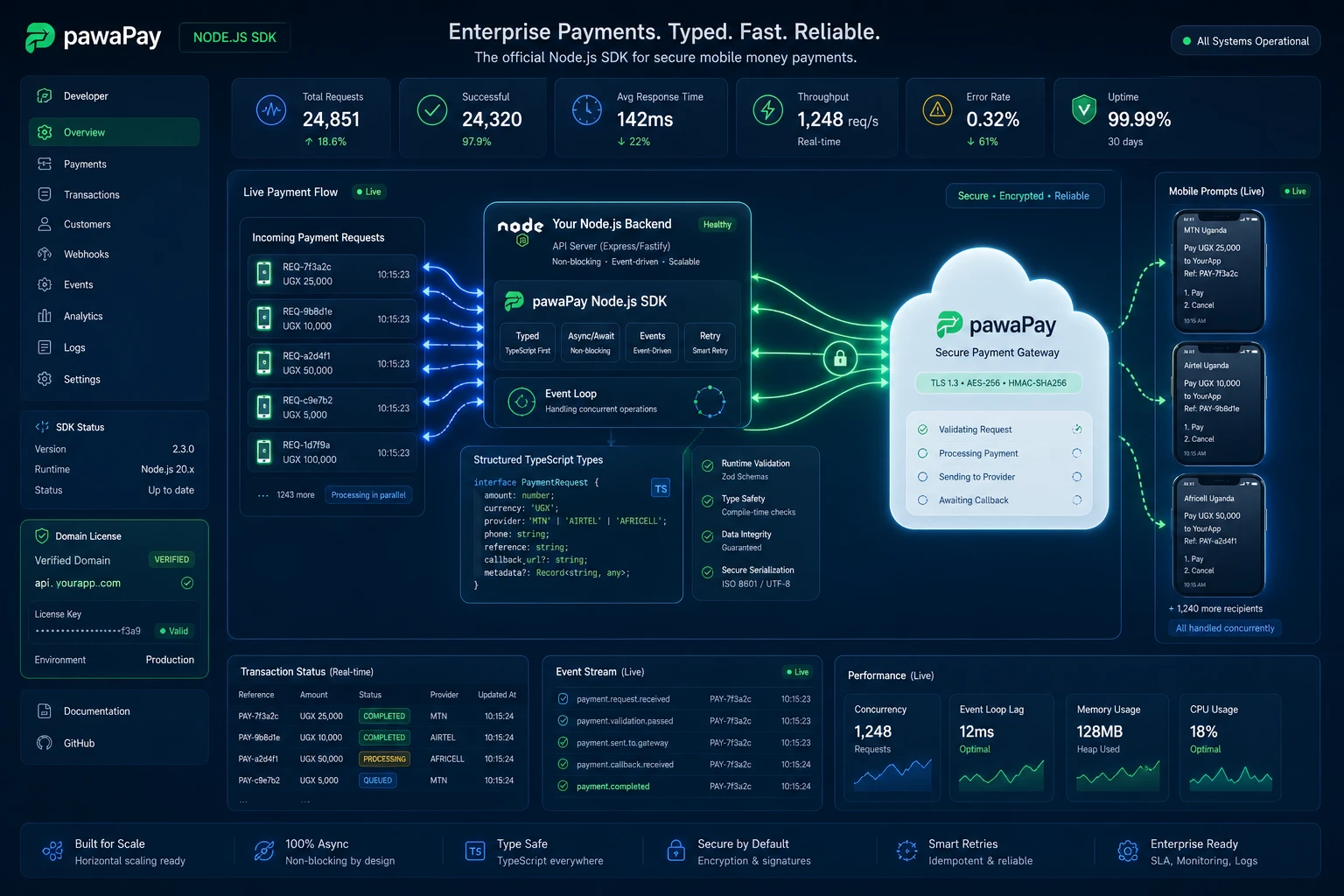
pawaPay Node.js SDK: Enterprise mobile money integration for Node.js & TypeScript. Strictly typed, async wrapper with simple domain-based licensing.
Clean My Mind - A Quiet Release

A privacy-first web ritual, no signup, say one sentence and let it go. Built with vanilla JavaScript, local-only storage, and focused on presence rather than analytics.
Professional Services
© Copyright 2026 - Katorymnd Web Solutions - All Rights Reserved. Registered with Uganda Registration Services Bureau.